



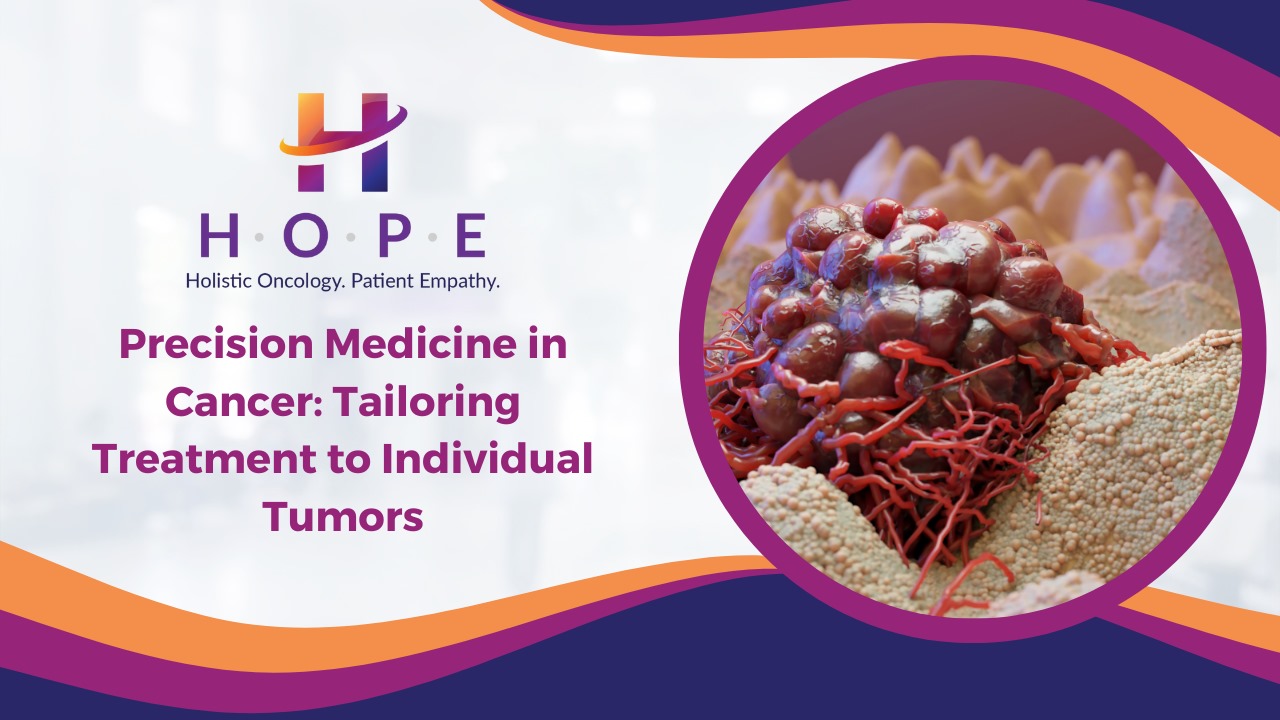
Precision medicine, also known as personalized or individualized medicine, is a transformative approach to cancer care that tailors treatment strategies to the unique molecular and genetic characteristics of each patient’s tumor. By leveraging advanced genomic and molecular profiling technologies, precision medicine aims to identify specific molecular alterations driving cancer growth and metastasis, allowing clinicians to select targeted therapies that are most likely to be effective for individual patients. In this article, we’ll explore the principles, applications, benefits, and challenges of precision medicine in cancer, highlighting its role in improving treatment outcomes and advancing the field of oncology.
Principles of Precision Medicine:
Precision medicine is grounded in the principle that cancer is a heterogeneous disease characterized by diverse molecular and genetic alterations that drive tumor initiation, progression, and treatment response. Rather than employing a one-size-fits-all approach to cancer treatment, precision medicine seeks to identify the unique genomic and molecular signatures of each patient’s tumor and match them with targeted therapies that exploit specific vulnerabilities or molecular dependencies within the cancer cells. This personalized approach aims to maximize treatment efficacy while minimizing toxicity and adverse effects associated with traditional chemotherapy and systemic treatments.
Applications of Precision Medicine in Cancer:
Molecular Profiling and Biomarker Identification:
Precision medicine relies on molecular profiling techniques, such as next-generation sequencing (NGS), gene expression profiling, and proteomic analysis, to identify specific molecular alterations and biomarkers associated with cancer subtypes, prognosis, and treatment response. By analyzing the tumor’s genomic landscape, clinicians can identify actionable mutations, gene fusions, or protein overexpression that can guide treatment decisions and therapeutic interventions.
Targeted Therapies and Molecularly Guided Treatment:
Targeted therapies are drugs or biologics designed to selectively inhibit or disrupt specific molecular targets or signaling pathways implicated in cancer growth and survival. Precision medicine enables the identification of actionable targets and the selection of targeted therapies that directly interfere with oncogenic drivers, such as receptor tyrosine kinases (e.g., EGFR, HER2), intracellular signaling molecules (e.g., BRAF, PI3K), or DNA repair pathways (e.g., PARP inhibitors). By matching patients with molecularly guided treatments, clinicians can optimize treatment outcomes and improve survival rates while minimizing off-target effects and treatment-related toxicities.
Immunotherapy and Immune Profiling:
Immune checkpoint inhibitors, a type of immunotherapy, have revolutionized cancer treatment by harnessing the power of the immune system to recognize and attack cancer cells. Precision medicine extends to immune profiling, which involves assessing the tumor microenvironment, tumor-infiltrating lymphocytes, and immune checkpoint expression patterns to predict response to immunotherapy and identify patients most likely to benefit from these treatments. Biomarkers such as programmed death-ligand 1 (PD-L1) expression levels and tumor mutational burden (TMB) can help stratify patients for immune checkpoint blockade and guide treatment decisions in various cancer types, including melanoma, lung cancer, and bladder cancer.
Resistance Mechanisms and Treatment Adaptation:
Precision medicine also encompasses the study of resistance mechanisms and treatment adaptation strategies to overcome acquired resistance to targeted therapies or immunotherapy. Tumor evolution, clonal heterogeneity, and the emergence of drug-resistant subpopulations pose challenges to long-term treatment efficacy. By monitoring tumor dynamics, molecular evolution, and clonal diversity through serial biopsies or liquid biopsies, clinicians can detect emerging resistance mechanisms and adjust treatment regimens accordingly, either by switching to alternative therapies, combining targeted agents, or implementing therapeutic interventions to overcome resistance pathways.
Benefits of Precision Medicine in Cancer:
Precision medicine offers several potential benefits for cancer patients, clinicians, and healthcare systems:
Improved Treatment Outcomes:
By targeting specific molecular vulnerabilities or oncogenic drivers within cancer cells, precision medicine can enhance treatment efficacy, increase response rates, and improve survival outcomes for patients with advanced or refractory cancers. Personalized treatment approaches tailored to individual tumor profiles can maximize therapeutic benefit while minimizing the risk of treatment-related toxicities and adverse effects.
Enhanced Patient Safety and Quality of Life:
Precision medicine aims to optimize treatment selection and minimize off-target effects by targeting molecular alterations that are unique to cancer cells. By sparing normal tissues from unnecessary toxicity, targeted therapies and immunotherapies can improve patient safety, reduce treatment-related complications, and enhance overall quality of life during cancer treatment and survivorship.
Tailored Treatment Strategies:
Precision medicine enables the development of tailored treatment strategies based on the molecular characteristics of each patient’s tumor. By identifying actionable targets and selecting targeted therapies with the greatest likelihood of clinical benefit, clinicians can optimize treatment responses, prolong disease control, and tailor treatment regimens to individual patient needs and preferences.
Accelerated Drug Development and Clinical Trials:
Molecular profiling and biomarker-driven approaches have revolutionized drug discovery and development in oncology by enabling more efficient and targeted clinical trial design. By enriching patient populations based on specific molecular alterations or biomarker signatures, precision medicine accelerates the evaluation of investigational agents, identifies patient subgroups most likely to respond to experimental therapies, and facilitates the translation of scientific discoveries into clinical practice.
Challenges and Future Directions:
Despite its tremendous potential, precision medicine in cancer faces several challenges and limitations:
Tumor Heterogeneity and Clonal Evolution:
Tumor heterogeneity and clonal evolution pose challenges to precision medicine by introducing spatial and temporal variability in the molecular landscape of cancer. Intra-tumoral heterogeneity, metastatic progression, and the emergence of drug-resistant clones can complicate treatment decisions and limit the effectiveness of targeted therapies over time. Strategies to overcome heterogeneity and adapt treatment regimens to evolving tumor dynamics will be critical for maximizing treatment efficacy and long-term outcomes.
Access to Molecular Profiling and Targeted Therapies:
Access to molecular profiling technologies, targeted therapies, and biomarker-driven treatments may be limited by factors such as cost, availability, and healthcare disparities. Disparities in access to precision medicine tools and therapies can exacerbate existing health inequities and widen the gap in cancer outcomes between different patient populations. Efforts to improve access to molecular testing, expand insurance coverage for precision medicine approaches, and address disparities in healthcare delivery are essential for ensuring equitable access to personalized cancer care.
Regulatory and Reimbursement Challenges:
Regulatory and reimbursement policies governing the approval, adoption, and reimbursement of targeted therapies and molecular diagnostics pose challenges to the widespread implementation of precision medicine in clinical practice. Regulatory frameworks for biomarker-driven drug development, companion diagnostics, and novel therapeutic interventions must adapt to accommodate the rapidly evolving landscape of precision oncology while ensuring patient safety, efficacy, and equitable access to innovative treatments.
Integration of Big Data and Artificial Intelligence:
The integration of big data analytics and artificial intelligence (AI) technologies holds promise for advancing precision medicine in cancer by leveraging large-scale genomic, clinical, and real-world data to inform treatment decisions, predict treatment responses, and identify novel therapeutic targets. Machine learning algorithms, predictive modeling, and data-driven approaches can help identify patterns, associations, and predictive biomarkers from complex datasets, enabling more accurate patient stratification, treatment selection, and clinical decision support.
Precision medicine represents a paradigm shift in cancer care that harnesses the power of molecular and genomic profiling to tailor treatment strategies to the individual characteristics of each patient’s tumor. By identifying specific molecular alterations, actionable targets, and predictive biomarkers, precision medicine enables the development of targeted therapies, immunotherapies, and personalized treatment regimens that optimize treatment outcomes, enhance patient safety, and improve quality of life for cancer patients. While challenges such as tumor heterogeneity, access disparities, regulatory hurdles, and data integration remain, ongoing research, collaboration, and innovation will continue to drive the evolution of precision oncology and transform the landscape of cancer treatment in the years to come.